
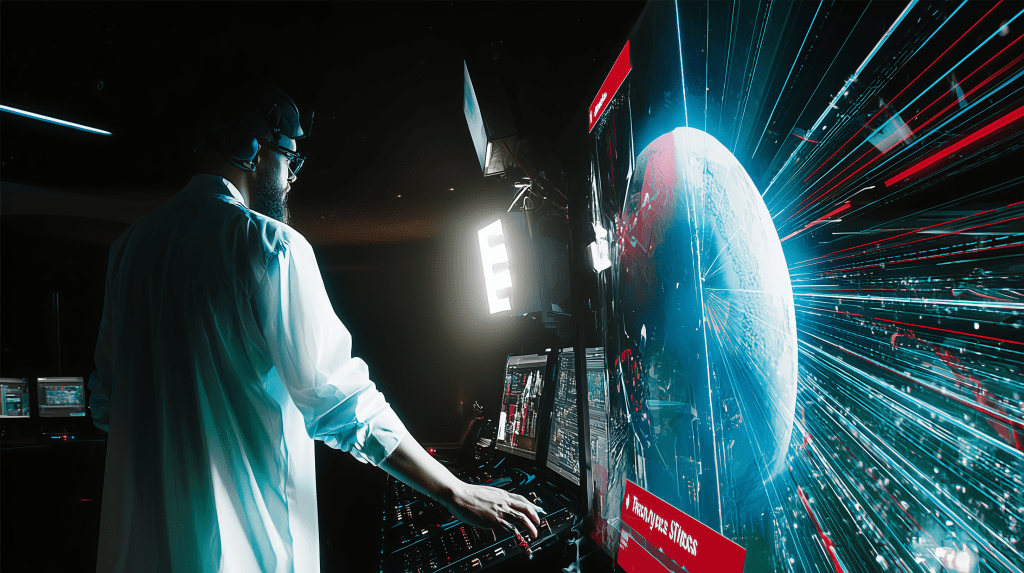
The untold story of how a college dropout used AI-generated video ads to dominate TikTok—and the exact playbook he used to do it.
Marcus Chen was three months behind on rent when he posted his first AI-generated TikTok video ad at 11:47 PM on a Tuesday. By Thursday morning, it had 2.3 million views. By the end of the month, his dropshipping business was generating six figures.
The twist? Marcus had never touched video editing software in his life, couldn’t afford to hire creators, and was working from his cramped studio apartment with nothing but a laptop and an internet connection.
His secret weapon wasn’t luck, timing, or even a revolutionary product. It was mastering the art of AI-generated video ads specifically designed for TikTok’s unique algorithm and audience behavior.
The TikTok Goldmine: Why AI and TikTok Are a Perfect Match
When Marcus first discovered TikTok’s advertising potential, he was stunned by the numbers. The platform’s algorithm could push a single video to millions of users in hours, but there was a catch: traditional advertising felt forced and out of place on a platform built for authentic, creative content.
“TikTok users can smell a traditional ad from a mile away,” Marcus explains. “But AI-generated content? When done right, it feels native, authentic, and engaging. The algorithm loves it because it drives engagement, and users love it because it doesn’t feel like an interruption.”
The data backed up his intuition. TikTok ads that felt native to the platform saw 22% higher engagement rates and 34% better conversion rates than obviously promotional content.
The Breakthrough: Marcus’s First Viral AI Video Ad
Marcus’s first success came from a 15-second video promoting phone accessories. Instead of traditional product shots, he used AI to create a micro-story: a phone falling in slow motion, an AI-generated character’s shocked expression, then the protective case saving the day—all set to trending audio.
The video cost him $12 to create using AI tools. It generated $47,000 in sales.
“I realized that TikTok isn’t just a social platform—it’s an entertainment platform,” Marcus says. “People don’t come to TikTok to shop. They come to be entertained. So I had to make my ads so entertaining that people watched them voluntarily.”
The TikTok AI Video Ad Framework: Marcus’s Secret Formula
After analyzing hundreds of successful TikTok ads and running over 200 AI-generated video campaigns, Marcus developed a framework that consistently produced viral content:
The 3-Second Hook Rule
TikTok’s algorithm measures engagement within the first three seconds. Marcus used AI to create instantly captivating openings:
- Visual Shock: AI-generated impossible scenarios (floating products, transforming objects)
- Pattern Interrupts: Unexpected visuals that make thumbs pause mid-scroll
- Emotional Triggers: AI avatars displaying exaggerated emotions that mirror viewer feelings
The “Stealth Selling” Structure
Marcus discovered that the most successful TikTok ads followed a specific 15-30 second structure:
Seconds 1-3: Hook with entertainment value Seconds 4-8: Problem presentation (disguised as relatable content)Seconds 9-15: Solution reveal (product integration) Seconds 16-20: Social proof or demonstration Seconds 21-25: Soft call-to-action Seconds 26-30: Trending audio climax with final product shot
The AI Tool Stack That Changed Everything
Marcus’s success came from combining multiple AI tools into a seamless workflow:
Runway ML for Dynamic Visuals: Creating impossible product demonstrations that grabbed attention instantly. Marcus would generate videos of his phone cases surviving ridiculous scenarios—falling from space, being attacked by AI-generated monsters, or transforming into different colors mid-air.
ElevenLabs for Voice Variety: Instead of using his own voice, Marcus created multiple AI personas. His “shocked teenager” voice persona became particularly viral, generating millions of views across dozens of videos.
Pika Labs for Micro-Animations: Adding subtle but captivating movements to static product images. A phone case that seemed to breathe, jewelry that sparkled with AI-generated light patterns, or clothes that moved with impossible wind effects.
ChatGPT for Trend Analysis: Marcus used AI to analyze trending TikTok content and generate video concepts that aligned with current viral formats while promoting his products.
Platform-Specific AI Strategies: The TikTok Difference
What Marcus learned was that TikTok required fundamentally different AI approaches than other platforms:
Vertical Video Mastery
Unlike YouTube or Facebook, TikTok’s vertical format meant every pixel mattered. Marcus used AI tools to optimize composition:
- AI-generated backgrounds that drew eyes to the product without distraction
- Vertical text animations that complemented the 9:16 aspect ratio
- Face-focused compositions that performed better in TikTok’s algorithm
Audio-First Approach
Marcus discovered that successful TikTok AI videos started with trending audio, not visuals:
- Trend Identification: Using AI to identify rising audio trends before they peaked
- Visual Synchronization: Creating AI visuals that perfectly matched audio beats and transitions
- Lip-Sync Integration: Using AI avatars that could lip-sync to trending sounds, making ads feel like user-generated content
The “Native Content” Illusion
The most successful TikTok ads didn’t look like ads at all. Marcus used AI to create content that mimicked popular TikTok formats:
- “Day in my life” style videos featuring AI avatars using his products naturally
- “Things I wish I knew” educational content with AI-generated demonstrations
- “Rating viral products” videos using AI to create multiple user personas reviewing his items
The Numbers: Marcus’s 90-Day Transformation
Marcus’s results speak for themselves, but the speed of his success was unprecedented:
Week 1: First viral video (2.3M views), $47K in sales Week 4: Consistent 500K+ views per video, $180K monthly revenue Week 8: 15 products launched, $420K monthly revenue Week 12: $1.2M total revenue, 50+ viral AI-generated ads
But the real breakthrough wasn’t just the money—it was the scalability. Marcus could now create 20-30 high-quality video ads per day using his AI workflow, something that would have required an entire production team just two years earlier.
Advanced TikTok AI Techniques: Going Beyond Basic Generation
As Marcus’s expertise grew, he developed sophisticated techniques that separated him from competitors:
Micro-Targeting with AI Personas
Marcus created AI-generated spokespersons for different demographics:
- “Gen Z Emma” for beauty products (bubbly, trend-aware personality)
- “Millennial Mike” for tech gadgets (informative but casual approach)
- “Parent Patricia” for family products (trustworthy, practical messaging)
Each persona had distinct visual characteristics, speech patterns, and content styles, all generated through AI.
Trend Prediction and Rapid Response
Using AI analytics tools, Marcus could identify emerging TikTok trends and create relevant video ads within hours:
- Trend Detection: AI monitoring of viral hashtags and audio clips
- Rapid Prototyping: Creating multiple video variations targeting the trend
- Algorithm Optimization: Using AI to determine optimal posting times and hashtag combinations
The “Comment Ecosystem” Strategy
Marcus used AI to generate authentic-feeling responses to comments on his videos, creating engagement loops that boosted algorithm performance. His AI system could:
- Analyze comment sentiment and respond appropriately
- Generate follow-up video content based on common questions
- Create personalized responses that felt human but scaled infinitely
The Dark Side: Challenges Marcus Faced
Success didn’t come without obstacles. Marcus encountered several challenges that taught him crucial lessons:
Platform Policy Navigation
TikTok’s policies around AI-generated content evolved rapidly. Marcus learned to:
- Clearly label AI-generated content when required
- Maintain authenticity despite using artificial tools
- Stay ahead of policy changes through community engagement
Authenticity vs. Automation
The biggest challenge was maintaining authentic connections with audiences while using AI tools. Marcus solved this by:
- Using AI to amplify his genuine personality, not replace it
- Responding personally to comments and messages
- Sharing behind-the-scenes content about his AI process
Algorithm Dependency
Relying heavily on TikTok’s algorithm meant vulnerability to changes. Marcus diversified by:
- Building email lists from TikTok traffic
- Creating AI content for multiple platforms
- Developing direct customer relationships beyond social media
The Replication Blueprint: How to Follow Marcus’s Path
Marcus’s success isn’t just inspirational—it’s replicable. Here’s his step-by-step blueprint for creating AI-generated TikTok video ads:
Phase 1: Foundation Building (Week 1-2)
- Tool Selection: Start with Runway ML for video generation, ElevenLabs for voice, and CapCut for basic editing
- Product Analysis: Identify your product’s most visual and demonstrable benefits
- Trend Research: Use TikTok’s Creative Center to identify trending formats in your niche
- First Video Creation: Generate 5-10 variations of your first AI video ad
Phase 2: Testing and Optimization (Week 3-6)
- A/B Testing: Test different AI-generated hooks, voiceovers, and visual styles
- Engagement Analysis: Use TikTok Analytics to identify which AI elements drive engagement
- Scaling Winners: Create variations of successful videos using AI tools
- Community Building: Engage authentically with comments to boost algorithm performance
Phase 3: Systematic Scaling (Week 7-12)
- Workflow Automation: Develop templates and systems for rapid AI video creation
- Multi-Product Expansion: Apply successful formats to new products
- Advanced Techniques: Implement persona-based marketing and trend prediction
- Revenue Optimization: Focus on conversion rate optimization and customer lifetime value
Essential Tools for TikTok AI Video Success
Based on Marcus’s experience, here are the must-have tools for creating successful AI-generated TikTok video ads:
For Beginners:
- CapCut: TikTok’s native editing app with AI features
- Lumen5: Simple AI video creation with TikTok templates
- Canva: AI-powered design elements for TikTok videos
For Intermediate Users:
- Runway ML: Advanced AI video generation
- Pika Labs: AI animation and effects
- ElevenLabs: AI voice generation for multiple personas
For Advanced Marketers:
- Custom AI Workflows: Combining multiple APIs for unique content
- Trend Analysis Tools: AI-powered social listening platforms
- Automation Systems: Zapier integrations for workflow optimization
The Future of TikTok Advertising: Marcus’s Predictions
Looking ahead, Marcus sees several trends shaping the future of AI-generated TikTok ads:
Hyper-Personalization
AI will enable real-time personalization of video ads based on individual user behavior, creating unique experiences for each viewer.
Interactive AI Content
Future TikTok ads will incorporate AI that responds to user comments and interactions in real-time, creating genuinely interactive advertising experiences.
Seamless Integration
The line between AI-generated and human-created content will continue to blur, with AI tools becoming invisible parts of the creative process.
The Bottom Line: Your TikTok AI Opportunity
Marcus’s story illustrates a fundamental shift in digital advertising. TikTok’s algorithm rewards engaging, native content—exactly what AI tools excel at creating when used strategically.
The opportunity window is still wide open. While major brands struggle with authenticity on TikTok, individual creators and small businesses using AI tools can move faster, test more boldly, and connect more authentically with audiences.
“The biggest mistake people make is thinking AI replaces creativity,” Marcus reflects. “AI amplifies creativity. It lets you test 50 ideas instead of 5, create content at the speed of thought, and compete with budgets 100 times larger than yours.”
Taking Action: Your First AI-Generated TikTok Video Ad
Ready to start your own TikTok AI success story? Here’s Marcus’s “first video” checklist:
- Choose trending audio from TikTok’s Creative Center
- Identify your product’s most visual benefit (protection, transformation, convenience)
- Create a 3-second hook using Runway ML or Pika Labs
- Generate 5 variations with different AI personas or visual styles
- Post at optimal times (typically 6-10 AM or 7-9 PM in your target timezone)
- Engage authentically with every comment in the first hour
- Analyze and iterate based on performance data
Your first video might not hit 2.3 million views like Marcus’s did, but it doesn’t need to. Success on TikTok is about consistency, creativity, and continuous improvement—all areas where AI tools provide massive advantages.
The algorithm is waiting, your audience is scrolling, and AI tools are more powerful and accessible than ever. The only question is: what story will your first AI-generated TikTok video ad tell?
Ready to create your first viral TikTok ad? Start with Runway ML’s free tier, pick trending audio from your niche, and generate your first AI video in the next 30 minutes. Your breakthrough moment could be just one scroll away.
 AdSpark AI - Video Ad Studio